
MAX3490EESA+T Datasheet Summary: Key Specs & Metrics
The MAX3490EESA+T is a 3.3V RS-422/RS-485 transceiver family member designed for robust multi-drop industrial links. It targets reliable differential communications with a rated line speed in the 10–12 Mbps class, strong ESD robustness, and built-in fail-safe behavior—making it a common choice where high immunity and compact 8-pin packaging are needed. This summary distills the datasheet into the critical specs and metrics engineers use to evaluate fit and design quickly.
MAX3490EESA+T: Overview & Key Characteristics
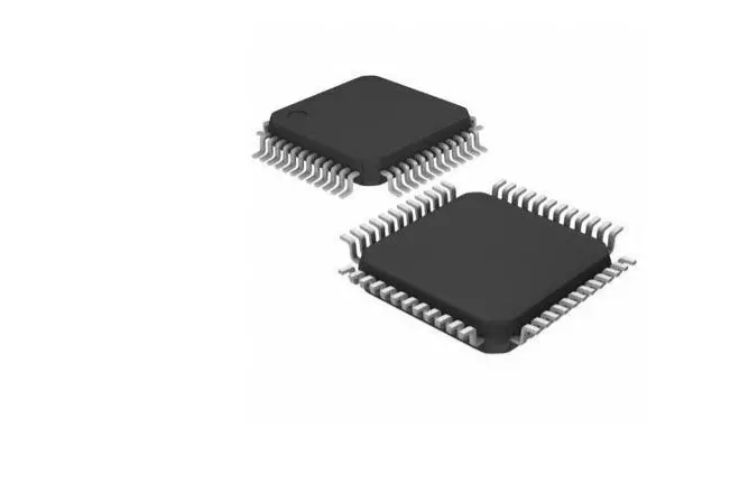
Part Description & Supported Interfaces
Point: The MAX3490EESA+T is a true RS-485/RS-422 transceiver optimized for 3.3V systems, supporting full- and half-duplex topologies depending on application wiring and control logic. Evidence: The part targets multi-drop industrial communications, instrumentation, and building-automation buses. Explanation: Designers pick this class of device where a compact, low-voltage transceiver with robust input handling and fail-safe behavior is required; the MAX3490EESA+T balances speed and protection for noisy installations.
- • VCC: 3.3 V nominal (device family intended for 3.0–3.6 V domains)
- • Max data rate: Up to ~10–12 Mbps (typical rated line rate)
- • ESD rating: High HBM/IEC immunity class (robust board-level tolerance)
- • Receiver hysteresis: Built-in to improve idle-bus stability
- • Slew-rate control: Limits EMI on long cable runs
Package, Supply & Operating Range
Point: The device is supplied in a small 8-pin surface-mount package (commonly 8-SO or equivalent). Evidence: Footprint dimensions are compact; board clearance and routing near the device should accommodate thermal vias if heavy power dissipation is expected. Explanation: Typical supply range centers on 3.3V with recommended operating window around 3.0–3.6V; ambient operating temperatures cover industrial ranges, and designers should check soldering/reflow notes for peak package temperatures and recommended PCB keepout for the pair differential lines.
Electrical Specifications & Performance Metrics
Absolute Maximums & Typical Values
Point: Distinguish absolute maximum ratings from recommended operating conditions to keep design margins. Evidence: The datasheet separates VCC absolute limits from recommended operating range and lists endurance limits. Explanation: Use the recommended conditions (e.g., VCC ≈ 3.3V ±0.3V) and treat absolute maximums as non-reversible stress limits.
| Parameter | Recommended / Typical | Notes |
|---|---|---|
| VCC (V) | 3.0 – 3.6 (nominal 3.3) | Use local regulation and decoupling |
| Max Data Rate |
~10-12 Mbps
|
Guaranteed signaling depends on loading |
| Receiver Threshold | ~200 mV (with hysteresis) | Fail-safe keeps bus defined when open/short |
| Driver Differential | ±1.5 – ±2.5 V | Depends on RL and common-mode |
Data Rate, Timing & Signal Integrity
Point: Timing numbers determine reliable bit-rates; propagation and edge rates govern maximum practical cable length. Evidence: The datasheet lists propagation delays and rise/fall times. Explanation: Use guaranteed propagation delay to compute maximum bit-rate, allowing margin for cable dispersion.
| Metric | Typical | Design Guidance |
|---|---|---|
| Driver Prop. Delay | tPD (ns) | Include in round-trip latency budget |
| Rise/Fall Time | ns–tens of ns (slew-limited) | Series damping recommended for ringing |
| Bit-rate Assumption | ≤ 10 Mbps | Use lower rates for long cables or many nodes |
Reliability, Protection & Environmental Ratings
ESD & Fault Protection
Robust I/O protection reduces field failures. Expect HBM/IEC-level ESD ratings. Design adds board-level TVS diodes at cable entries, proper chassis grounding, and short-circuit limiting practices. If thermal limiting is specified, rely on it for transients but use external protection for persistent faults.
Thermal Performance
Thermal limits set allowable continuous loading. Note theta_JA to calculate junction temperature under expected ICC; apply derating across temperature range. Follow recommended soldering/reflow peak temperatures to avoid package damage.
Practical Design Considerations & Implementation Guide
PCB Layout & Termination
Route the differential pair with controlled impedance, minimize stubs, and place termination resistors at far ends. Implement a bias network to guarantee defined idle voltage.
Quick Summary
- ✔ Compact 3.3V Transceiver: Targets ~10–12 Mbps operation with robust bus immunity.
- ✔ Key Metrics: VCC (3.0–3.6V), receiver threshold hysteresis, and wide common-mode tolerance.
- ✔ Best Practices: 120 Ω termination, local decoupling, and TVS protection for industrial environments.
