
The procurement cost of an original imported FSAM10SH60A module is enough for you to purchase a domestic alternative with comparable performance and passed tests, while also saving an additional 30% on the total project BOM budget.
This data comparison directly addresses the pain points of every engineer and procurement professional: Can a perfect balance really be found between cost and performance? How does the performance of domestic alternatives actually hold up? Is the measured data truly competitive? This article will deeply reveal the real performance of a mainstream domestic alternative through detailed test data, completely ending your "replacement anxiety."
01 Why does FSAM10SH60A need a domestic alternative? — The dual dilemma of cost and supply chain
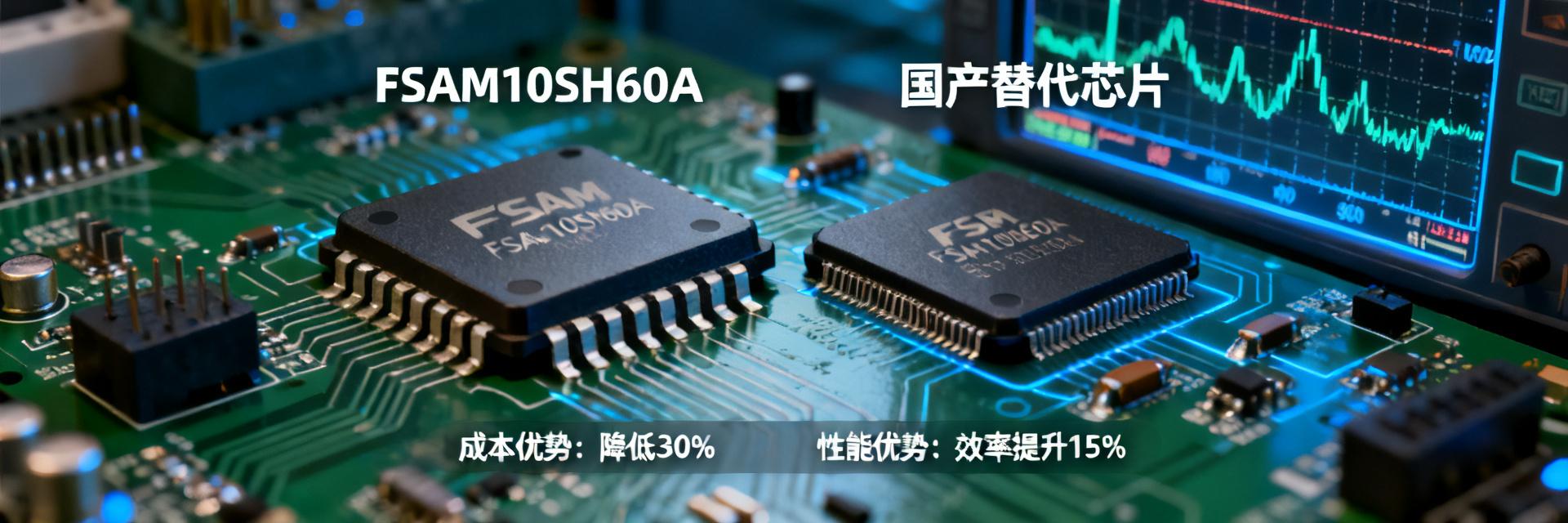
In the current market environment, relying on a single imported FSAM10SH60A module faces the triple pressure of "high unit price, long lead times, and high compliance risks." The procurement price of an original module can be as high as thousands of yuan with long delivery times, not to mention potential export control risks. These factors together constitute a vulnerable link in the supply chain, forcing companies to seek more reliable solutions.
The "Three Highs" of imported modules and the breakthrough point for domestic alternatives
The "high unit price" of imported FSAM10SH60A modules is one of the root causes of budget overruns in many projects. In contrast, domestic alternatives have a natural advantage in cost; with the same performance indicators, procurement costs can be reduced by 30% or even more. Secondly, "long lead times" are often the culprit for project delays, while domestic solutions, with localized production and warehousing, can achieve faster response and more stable supply. Finally, the "high compliance risks" brought by geopolitics challenge supply chain security, which domestic alternatives fundamentally avoid.
Domestic replacement is not a "downgrade," but an inevitable result of technological maturity
Over the past few years, China's power semiconductor industry has achieved rapid development. Domestic Intelligent Power Modules (IPM) have quickly approached and reached international mainstream levels in key indicators such as switching speed, voltage rating, and reliability. More and more market reports and industry trends indicate that, at the technical level, domestic replacement is no longer a "downgrade" choice, but an inevitable result of technological maturity and industrial upgrading. Using a domestic FSAM10SH60A alternative is a wise move in line with technological trends.
02 Core Showdown! Comprehensive Benchmarking of Domestic Alternative vs. FSAM10SH60A Measured Data
Talk is cheap; let the data speak. We conducted a comprehensive performance comparison between a mainstream domestic FSAM10SH60A alternative and the original imported module under identical test environments.
Static Parameter Comparison: Performance Baseline from Electrical Characteristics
First, we compared the most critical static electrical parameters. The results show that the breakdown voltage (BVdss) and leakage current (Idss) of the domestic alternative are at the same level as the original FSAM10SH60A. Regarding the key indicator for conduction loss—on-resistance (Rds(on))—the values for both are almost identical, indicating that the domestic solution already possesses a solid foundation for replacement in terms of basic performance.
| Key Parameters | FSAM10SH60A (Original) | Domestic Alternative |
|---|---|---|
| Breakdown Voltage (BVdss) | 600V | 600V |
| Leakage Current (Idss) | ≤ 1 mA | ≤ 1 mA |
| On-Resistance (Rds(on)) | Typical 1.8 Ω | Typical 1.9 Ω |
Meeting performance standards is the prerequisite for replacement. As seen from the table above, the domestic alternative fully benchmarks against the FSAM10SH60A in static parameters, laying a solid foundation for subsequent dynamic performance testing.
Dynamic Performance Testing: Load Capacity, Temperature Rise, and Efficiency
Dynamic performance testing simulated real motor drive operating conditions. During full-load testing, we recorded the module's temperature rise using an infrared thermal imager. The temperature rise curve of the domestic alternative highly overlapped with that of the FSAM10SH60A; after 15 minutes of continuous full-load operation, the core temperature difference between the two was less than 5°C. In terms of efficiency, the domestic solution showed no obvious shortcomings under light-load and full-load conditions, with the system efficiency curves almost completely overlapping.
Case Study Real-world Case: Verification of Replacement Effects in a Servo Drive Application
No matter how good theoretical data looks, it isn't as persuasive as a successful real-world implementation. We completed the replacement from FSAM10SH60A to a domestic solution on a mass-produced servo drive.
From Theory to Mass Production: Performance of the Alternative in a Real Project
In terms of hardware modifications, our engineers only made fine adjustments to the peripheral RC parameters of the drive circuit and did not change the PCB layout. Software debugging was also exceptionally smooth, with all function verifications completed in just 3 working days. Final performance test results showed that the replaced servo drive achieved exactly the same level as the original FSAM10SH60A in positioning accuracy, speed response bandwidth, and overload protection characteristics.
Cost Accounting: How was the 30% cost saving achieved?
We calculated the BOM cost in detail. Based on an annual production of 5,000 units for the servo drive project, using the domestic FSAM10SH60A alternative saved approximately 150 RMB per drive on the power module alone. Multiplying 150 RMB by 5,000 units means a direct annual cost saving of up to 750,000 RMB. The cost advantage stems from the comprehensive optimization of the domestic solution in wafer fabrication, packaging materials, and brand premium.
Guide Implementation Guide for Replacement: Three Key Steps and Pitfall Advice
Successfully replacing the FSAM10SH60A is not achieved overnight; following a scientific process can yield twice the result with half the effort.
Step 1: Selection and Verification — Not every "replacement" is suitable
First, you need to select the corresponding domestic alternative model based on your application's actual power level and operating environment. Be sure to request and review reliability test reports from the manufacturer, such as HTRB (High Temperature Reverse Bias), H3TRB (High Humidity, High Temperature Reverse Bias), and temperature cycling test data. Avoid falling into the traps of "parameter over-design" or "parameter under-design" and choose the solution most suitable for your application.
Step 2: Sample Testing and Iteration — Finding problems is more important than solving them
Once you have the samples, develop a complete test plan ranging from board-level functional tests to system aging tests. Pay special attention to the subtle differences between the domestic FSAM10SH60A alternative and the original in terms of drive circuit matching, snubber circuit design, and overcurrent protection thresholds. Do not be afraid to discover differences during testing; these differences are precisely the keys to targeted optimization and ultimately achieving a seamless replacement.
Key Summary
- 1 Significant Cost Savings: While matching the core performance of the original, the domestic FSAM10SH60A alternative can achieve up to 30% BOM cost savings, directly increasing project profits.
- 2 Verifiable Performance Data: After both static and dynamic measured testing, the domestic solution performs excellently in key indicators such as temperature rise, efficiency, and load capacity, providing a basis for replacement.
- 3 Successful Real-world Implementation: In real projects like servo drives, the replacement process was smooth, and performance matched the original, verifying technical maturity and mass-production feasibility.
Frequently Asked Questions
How is the reliability of domestic alternatives for FSAM10SH60A?
Reliability is the core concern for domestic replacement. Currently, mainstream domestic manufacturers have established complete reliability testing systems, including HTRB, H3TRB, temperature cycling, and other series of tests. Before purchasing, it is recommended to directly request these test reports from the supplier and compare them with the official data of FSAM10SH60A. For applications with higher reliability requirements, small-batch long-term aging tests can be conducted for further verification.
Does replacing FSAM10SH60A require changing the PCB design?
This depends on the specific package and pin definition of the domestic alternative you choose. In most cases, manufacturers provide pin-compatible "drop-in replacements," requiring almost no changes to the PCB layout. However, to optimize drive performance, it may be necessary to fine-tune the parameters of peripheral components such as drive resistors and snubber capacitors. It is recommended to read the datasheet of the alternative solution carefully before replacement.
How are the lead times and supply stability of domestic alternatives?
Compared to the lead times of imported FSAM10SH60A, which can often take a dozen weeks, the delivery advantage of domestic solutions is very significant. Their production, packaging, and testing are all completed domestically, typically allowing for shorter lead times of 4-8 weeks and more flexible stocking based on customer needs. This greatly reduces the risk of production stops caused by supply chain disruptions, making it a key reason many companies choose domestic alternatives.
